
- Home
- Quiz
Take the quiz

Take the
Period Quiz
Take our period quiz to see how much you know about your own cycle.
Period Quiz

Period Quiz
How much do you know about your menstrual cycle and symptoms?
-

Most women of childbearing age have periods every month. Despite how regularly this occurs, many people have a limited understanding of their menstrual cycle.
-

Take this period quiz to see how much you know about your own cycle and learn some helpful period facts. Remember, knowledge is power!
- The aim of this quiz is to help you learn more about your period and periods in general. This content is for educational purposes only and should not be used for the diagnosis of any condition. Periods can differ for every individual. If you experience concerning menstrual symptoms or heavy periods, contact your health care provider for advice.
What counts as the first day of a new menstrual cycle?
-

Explanation
The first day of your period marks the start of your menstrual cycle, which lasts until the first day of your next period.
How long is the average menstrual cycle?
-
Explanation
This is the average length of a menstrual cycle, but a “normal” cycle can range anywhere between 21 and 35 days.
How many phases are there in the menstrual cycle?
-
Explanation
There are 4 phases in the menstrual cycle:
-

Menstrual phase
This is when your period starts and your body sheds the uterine lining, causing menstrual bleeding. It usually lasts about 3–7 days.
-

Follicular phase
Your body starts preparing for ovulation by thickening the uterine lining and growing follicles in the ovaries, one of which will mature into an egg.
-

Ovulation
Your ovary releases a mature egg, usually around the middle of your cycle. This is the time when you’re most likely to get pregnant.
-

Luteal phase
Your body gets ready for a possible pregnancy by increasing progesterone. If pregnancy does not occur, hormone levels drop and your next period begins.
Which of the following is the most commonly reported period symptom?
-
Explanation
Reported data shows that stomach pain and cramps are the most common symptom:
Stomach pain and cramps – 64%
Tiredness and fatigue – 49%
Mood changes - 44%
Change of appetite – 20%
Why does tiredness and fatigue have such a big role to play during your period?
-
Explanation
An iron supplement like Weliva® Active IronTM can be a helpful way to increase your iron levels and restore your energy, while being gentle on the stomach.
How many women suffer with heavier periods?
-
Explanation
One in three women experience heavier periods.
Which of the following is not a sign of heavy menstrual bleeding?
-
Explanation
Bleeding that lasts 7+ days may be a sign of heavy menstrual bleeding, while 3-5 days is typical.
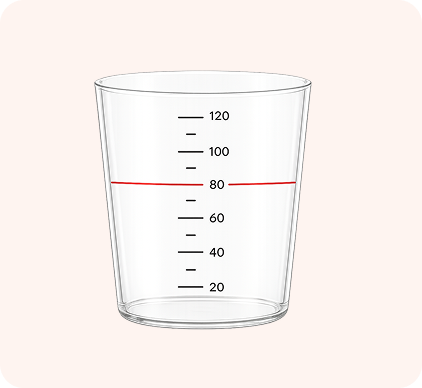
How much bleeding is considered abnormal during a period?
-
Explanation
If you’re losing 80ml or more of blood each period, it may indicate heavy menstrual bleeding. It’s best to speak with your healthcare provider for advice and support. They may suggest an iron supplement like Weliva® Active Iron TM, to help maintain your iron levels.
What color is normal for period blood?
-
Explanation
Healthy period blood typically ranges from bright red to dark brown or black.
Pink blood typically happens at the beginning of your period when your bleeding is at its lightest flow.
Bright red blood early in your period means it’s fresh and flowing quickly, so it hasn’t had time to oxidize.
Dark red, brown or black blood indicates slightly older blood and a slower flow as the blood darkens throughout your cycle.
Which if the following period myths is not true?
-
Explanation
There are ways to help manage discomfort related to periods. Consult this guide to learn about options that can help relieve your symptoms.
What can happen to periods during perimenopause?
-
Explanation
During perimenopause, hormone levels begin to change, which can affect your menstrual cycle. Periods may become less regular, and bleeding may become lighter or heavier than usual. This transition often happens before menopause.
When is a person considered to have reached menopause?
-
Explanation
Menopause is reached when a person has gone 12 consecutive months without a period. It marks the end of the menstrual cycle and the fertile phase of life.
Do symptoms always stop once your periods end at menopause?
-
Explanation
Even after periods stop, hormonal changes can continue to cause symptoms like hot flashes, sleep disturbances, irritability and fatigue.
Just like period symptoms, there are ways to support your body and manage these changes. Weliva® Cimidona® can help provide support women navigating this life stage.

Congratulations
Your results are in!
/ 13
-

Your menstrual cycle can reveal a lot about your overall health, and as your body changes over time, so can your symptoms.
-

Keeping track of your cycle and understanding how it affects you can help you feel more informed and in control.
-

If you often experience fatigue during your period, low iron levels could be a contributing factor.
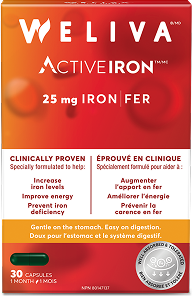
Weliva® Active IronTM can help support your iron levels and energy, while being gentle on the stomach.
This product may not be right for you. Always read and follow the labels.
Check Your
Iron Levels
Take our iron quiz to find out whether you may be showing signs of low iron.
Low Iron Quiz
Welcome to the Active Iron Self-Assessment Quiz
Iron plays a key role in energy, focus and overall health but many people don’t realize they may be low in iron. This quick quiz helps you understand your personal risk based on your age, gender, symptoms and lifestyle. It takes less than 2 minutes to complete. There are no right or wrong answers, just choose what’s right for you.
This self-assessment quiz is provided for informational purposes only and has not been clinically validated. It is not intended to diagnose iron deficiency or any other medical condition and should not replace consultation with a healthcare professional. If you have symptoms or concerns, please speak with your healthcare provider. Minors under the age of 16 should complete this questionnaire in the presence of a parent or a person with decision-making responsibility over them. This product may not be right for you. Always read and follow the labels.
Which bracket do you fall under?
Do you have regular periods?
Do you have heavy periods? (e.g. Needing to change sanitary products very frequently, using a pad and tampon at the same time or adding extra pads at night, or having periods that last longer than 7 days.)
Are you an athlete, or do you exercise regularly?
Do you regularly eat meat and dark green vegetables?
Do you follow a vegetarian diet?
Do you have a condition that affects absorption, such as coeliac disease, IBD (including ulcerative colitis or Crohn’s disease), or a history of gastric surgery?
Do you frequently experience any of the following?
Choose any 6 symptoms that apply
Do you frequently do any of the following?
Do you have regular periods?
Do you have heavy periods? (e.g. Needing to change sanitary products very frequently, using a pad and tampon at the same time or adding extra pads at night, or having periods that last longer than 7 days.)
Are you pregnant or postpartum?
Are you an athlete, or do you exercise regularly?
Do you follow a vegetarian diet?
Have you donated blood in the last 3 months?
Do you have a condition that affects absorption, such as coeliac disease, IBD (including ulcerative colitis or Crohn’s disease), or a history of gastric surgery?
Do you frequently experience any of the following?
Choose any 6 symptoms that apply
Do you frequently do any of the following?
Do you have regular periods?
Do you have heavy periods? (e.g. Needing to change sanitary products very frequently, using a pad and tampon at the same time or adding extra pads at night, or having periods that last longer than 7 days.)
Are you pregnant or postpartum?
Are you an athlete, or do you exercise regularly?
Do you follow a vegetarian diet?
Have you donated blood in the last 3 months?
Do you have a condition that affects absorption, such as coeliac disease, IBD (including ulcerative colitis or Crohn’s disease), or a history of gastric surgery?
Do you frequently experience any of the following?
Choose any 6 symptoms that apply
Do you frequently do any of the following?
Result
Your score is

Low Risk
Low likelihood of low iron levels - maintain a balanced iron-rich diet

Moderate Risk
Possible low iron - consult your GP or consider taking an iron supplement such as Active Iron

High Risk
Likely low iron - consult your GP who may recommend taking Active Iron
This self-assessment quiz is provided for informational purposes only and has not been clinically validated. It is not intended to diagnose iron deficiency or any other medical condition and should not replace consultation with a healthcare professional. If you have symptoms or concerns, please speak with your healthcare provider. Minors under the age of 16 should complete this questionnaire in the presence of a parent or a person with decision-making responsibility over them. This product may not be right for you. Always read and follow the labels.
Enter your email below to subscribe to our mailing list!
Enter your email below to subscribe to our mailing list! We take your privacy seriously and are committed to safeguarding your personal information in accordance with applicable laws. By submitting your email, you consent to the collection, use, disclosure, and retention of your personal information as described in our Privacy Policy. Please consult the Policy to better understand how we handle your information and to exercise your rights, including the right to withdraw your consent at any time.

