
Benefits
Its gentle, clinically proven formula helps:
-
Prevent iron deficiency and iron deficiency anemia.
-
Reduce tiredness and fatigue associated with low iron levels.
-
Improve energy in women with low iron levels.
-
Form red blood cells and helps in their proper function.
-
Pregnant women meet the recommended intake for iron, when taken in conjunction with a healthy diet.
Clinically Proven Benefits
Tolerability
-

Easy on digestion
-

Gentle on the Stomach
-

Well absorbed &
generally well tolerated
Product Features
-

One capsule per day
-

No artificial preservatives
-

Free from gluten,
yeast and added sugar
Overview
Clinically proven solution
Supporting iron
balance naturally
In Canada, an estimated 7% to 11% of the population is iron deficient, while 18% to 29% of women aged 19–50 are at an elevated risk of becoming iron deficient.1
Certain groups may have an increased need for iron, these include:


Women who are athletes.

Women with heavy periods, including perimenopausal.

Pregnant women aiming to meet Health Canada’s recommended iron intake while maintaining a nutritious diet.

People with restricted diets, such as vegetarians, who may not to get sufficient iron from food alone.
For these individuals, iron supplements can be an effective solution to help support adequate iron levels.
Challenges of Iron Supplements
Evidence suggests that up to 70% of people who take iron supplements report side effects such as constipation, abdominal discomfort and diarrhea.2

Active Iron’s patented protein formula targets the body’s natural site of absorption, the DMT-1 transporter mainly expressed in the proximal small intestine, optimizing iron delivery and minimizing the occurrence of constipation and abdominal pain.3,4
Efficacy
How Active Iron Works?
Active Iron is unique. Its patented whey protein formulation was designed to target the body's primary site of iron absorption, the duodenum, where the DMT-1 transporter plays a key role in iron absorption. In vitro findings suggest that this mechanism may help reduce iron-related oxidative stress and the potential for intestinal mucosal damage.3
As a result, a greater amount of iron from Active Iron may reach the site of absorption compared with other iron supplements,3 which may contribute to enhanced iron uptake.
Usage & Dosage
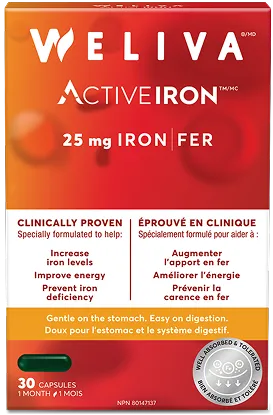
Recommended dosage: Adults and adolescents, 9 years and older: One capsule daily with food, a few hours before or after taking other medications or natural health products.
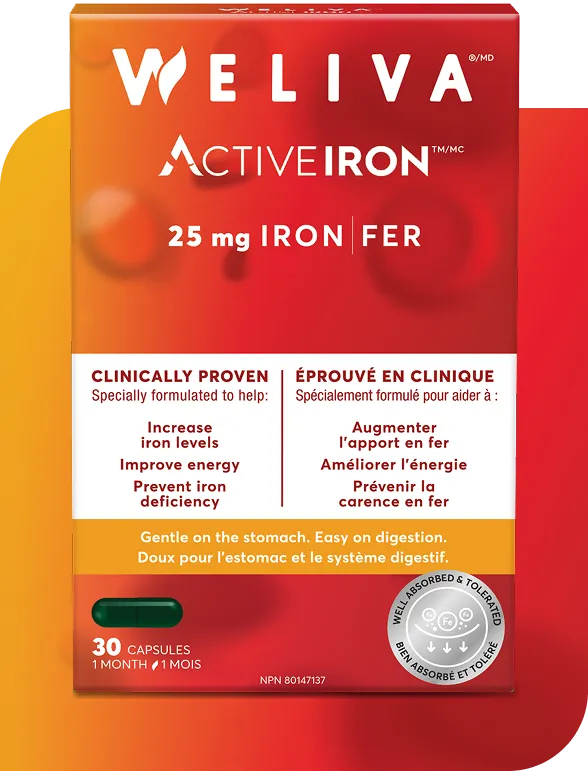
Medicinal ingredient per capsule: Iron/Elemental Iron .... 25 mg (from ferrous sulfate formulated in a whey protein matrix).
Non-medicinal ingredients: Whey protein isolate, sodium acetate, ascorbic acid, acetic acid, polysorbate 20, capsule shell (hypromellose, calcium phosphate tribasic, calcium carbonate, sodium copper chlorophyllin).
Store: at room temperature in a dry place.
Cautions & Warnings
Warning: Keep out of reach of children. There is enough iron in this package to seriously harm a child. Stop use if hypersensitivity occurs.
Clinical Studies on Active Iron
Active Iron reshapes how iron supplements commonly work. It’s designed to help overcome some of the common drawbacks women may have experienced with traditional iron supplements. Backed by rigorous science, Active Iron’s cutting-edge formula is clinically proven to increase iron levels, minimize the occurrence of constipation, and be gentle on the stomach.

Clinically Proven Absorption.
Active Iron is designed to target the body's predominant site of iron absorption, thereby optimizing iron release.3

Gentle on your Gut.
In a clinical study, most participants, including those with sensitive stomachs, found Active Iron more tolerable than their previous oral iron supplements.4
-
 Study 1
Clinically Well Absorbed.
Wang et al., 2017†

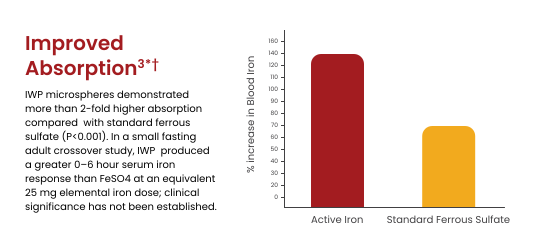
In a clinical study, Active Iron demonstrated approximately two-fold higher iron absorption3 than ferrous sulfate, supporting its role in iron absorption.
-
 Result 1
Clinically Proven Efficacy.
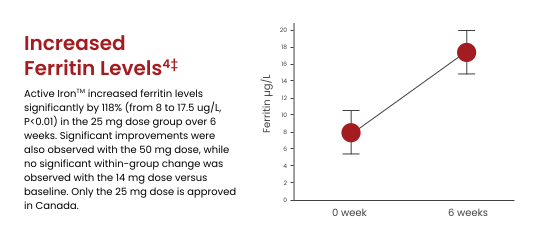
118% Increase in Iron Levels
Clinical evidence showed that Active Iron increased iron levels by 2.2-fold over 6-weeks4, providing significant support for individuals with iron deficiency who participated in the study.
-
 Study 2
Clinically Proven Efficacy.
Ledwidge et al., 2021‡
Generally well tolerated
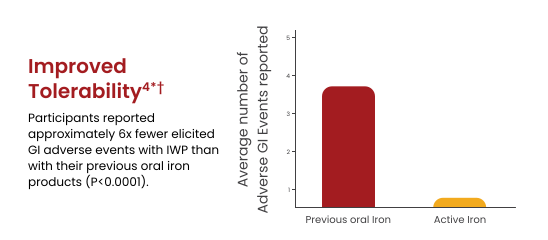
Our clinical study demonstrated that Active Iron was associated with six times fewer elicited adverse GI events4 compared to other iron supplements.
-
 Result 2
Significant Increase in Energy Levels
Ledwidge et al., 2021**
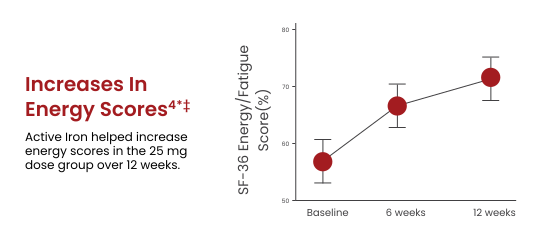
Across the overall study population, participants reported increased energy levels4, with significant within-group improvements also observed in the 25 mg daily dose group. These results highlight an increase in iron stores, along with an improvement in energy levels observed during the study.
Footnotes
*Data shown represents results for the overall study population, including participants randomized to unapproved doses (14 mg and 50 mg). Only the 25 mg dose is approved in Canada. See Study Description in the Footnotes for additional details.
† Wang et al. (2021): Healthy adults (n=21), aged 18-40, took part in a 6-10 week cross-over study involving three clinic visits. The study compared how well Active IronTM, which contains 25mg elemental iron, was absorbed versus a 25-mg elemental iron equivalent in the form of iron sulphate. As measured by serum iron trough to-peak ratio % over 0–6 hours in a prospective, randomized, cross-over study in fasting volunteers (n = 21 per group). Iron-WP microspheres demonstrated a greater maximal increase in absorption than FeSO4 (149 ± 39% vs 65 ± 14%; p < 0.001). Clinical significance has not been established.
‡ Ledwidge. M et al. (2017): Fifty‑nine women of childbearing age with a self-reported history of intolerance to oral iron were randomized to one of three daily doses of Active Iron’s iron-whey protein microspheres (14 mg, 25 mg or 50 mg) to assess how well women were able to stay on treatment, which was the main study objective. The secondary study objectives were to assess digestive comfort and improvements in iron stores, as well as hemoglobin levels and energy over 12 weeks. Participants reported six times fewer adverse events that were possibly or probably associated with IWP (0.59 ± 0.91 vs. 4.0 ± 2.2 for prior oral iron, P < 0.001). Only the 25 mg dose is approved in Canada.
References:
- Cooper M et al. Population Iron Status in Canada: Results from the Canadian Health Measures Survey 2012–2019. The Journal of Nutrition. March 12, 2023. https://doi.org/10.1016/j.tjnut.2023.03.012
- Meirovich H. Treating iron deficiency with oral iron supplements: what is the best dosing frequency? Canadian Blood Services. February 23, 2023. https://profedu.blood.ca/en/blog/treating-iron-deficiency-oral-iron-supplements-what-best-dosing-frequency
- Wang J et al. (2018). Novel Iron-Whey Protein Microspheres Protect Gut Epithelial Cells from Iron-Related Oxidation Stress and Damage and Improve Iron Absorption in Fasting Adults. Acta Haematologica. DOI: 10.1159/000480632
- Ledwidge M et al. (2023). Management of iron deficiency in women of childbearing age with oral iron intolerance: a prospective, randomised, controlled trial of three doses of an iron‑whey‑protein formulation. International Journal of Clinical Pharmacy. https://doi.org/10.1007/s11096-023-01640-7
Disclaimers:
This product may not be right for you. Always read and follow the label.
The ACTIVE IRON logos are trademarks of Solvotrin Therapeutics Ltd., used under license.

